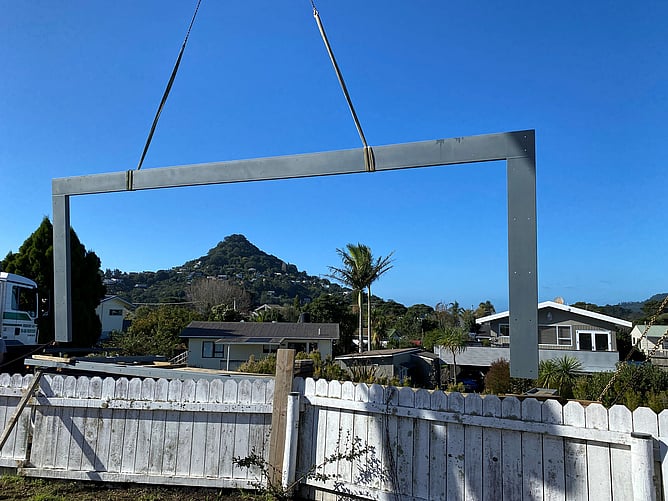
When we quote structural steel for a project, you'll often see the fabrication priced separately from the installation.
There's a reason for that.
We can accurately price the steel components we're fabricating in our workshop. We know what's on the drawings, what materials are required and what's involved in making them.
Installation is different.
There are simply more variables once we get to site. That's why at Alted Engineering, structural steel installation is generally provided as an estimate rather than a fixed price.
What can change during structural steel installation?
Even with good planning, what happens on site isn't always predictable.
A job that looks straightforward on paper might require one site visit. Or, depending on the building programme, we might be asked to install one section of steel, return for another, then come back again once the next stage is ready.
Access can change too. Scaffolding might need to be moved before we can position a beam. Timber framing may need adjusting to allow steel to fit through or around it. We may need to work with the builder to confirm exact positions before anything can be fixed down.
None of these things is unusual. They're simply part of working on a live construction site.
Our steel installation and on-site welding work is planned carefully, but we also need to allow for what we find when we get there.
Sometimes, drilling a hole takes half an hour
Fixing structural steel to concrete is a good example of why installation time can be difficult to predict.
Steel posts and portals are often fixed using drilled holes, epoxy and threaded studs. Sometimes the drill goes straight through the concrete and the job moves quickly.
Other times, we hit reinforcing steel.
Suddenly, a couple of holes can take half an hour. During that time, a crane may be holding a portal in position while two or three people are waiting to complete the next stage.
One small delay compounds quickly when you've got labour and lifting equipment on site.
The crane can change too
We generally estimate crane requirements based on the information available when we're pricing the job.
But site conditions can affect that.
The position of the building, access, lifting distance and where the crane can safely set up can all influence the size of crane required. Sometimes a smaller crane will do the job. Other times, once we're on site, a larger crane may be needed.
On some projects, the builder may choose to collect and install smaller steel components themselves, meaning those installation costs disappear altogether.
We'd rather estimate realistically and charge for what's actually required than build the cost of the largest crane and every possible scenario into every quote.
What is fixed and what is estimated?
Our quotes separate the parts of the job so it's clear what you're paying for.
Typically, this includes the supply of the fabricated steel components, working drawings, and then estimated installation costs based on the expected labour, time on site and crane requirements.
For our structural steel projects, the goal is to get as much sorted before site as possible. Accurate drawings, careful fabrication and good communication with the builder all help reduce installation time and avoid unnecessary problems.
But we're also realistic about construction.
Sites change. Programmes move. Other trades are working around us. And sometimes you hit reinforcing steel when you'd really rather not.
That's why installation is an estimate.
Not because we don't know what's involved, but because we do.