Most people don't think much about retaining walls until one starts moving. That's where a waler beam comes into play.
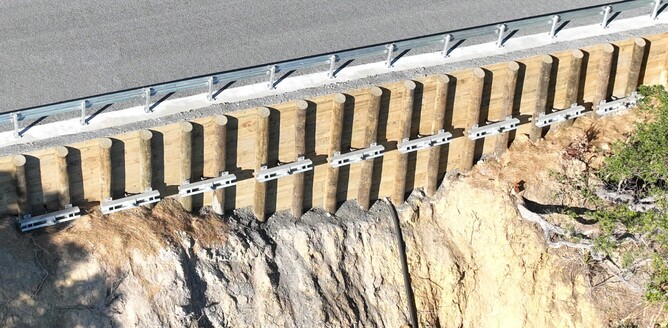
A what? A waler beam is a horizontal structural beam that runs across a retaining wall and distributes load between its supporting elements, rather than letting pressure concentrate at individual points. In many designs, it also provides the connection point for ground anchors.
Behind a well-built retaining wall there's some serious engineering, particularly when you're dealing with coastal conditions, ground pressure and the need for long-term durability.
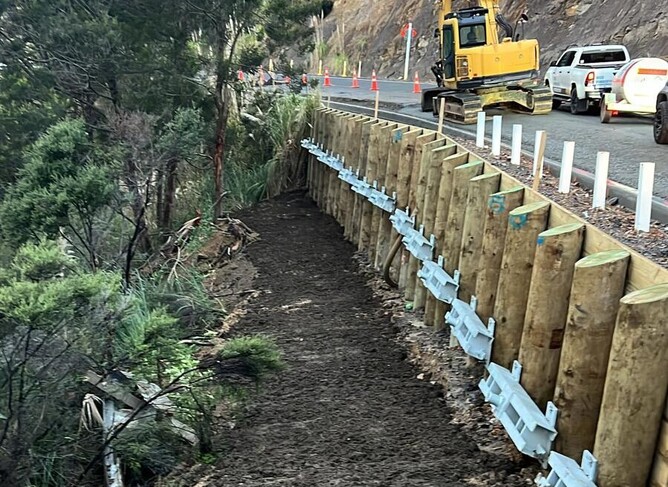
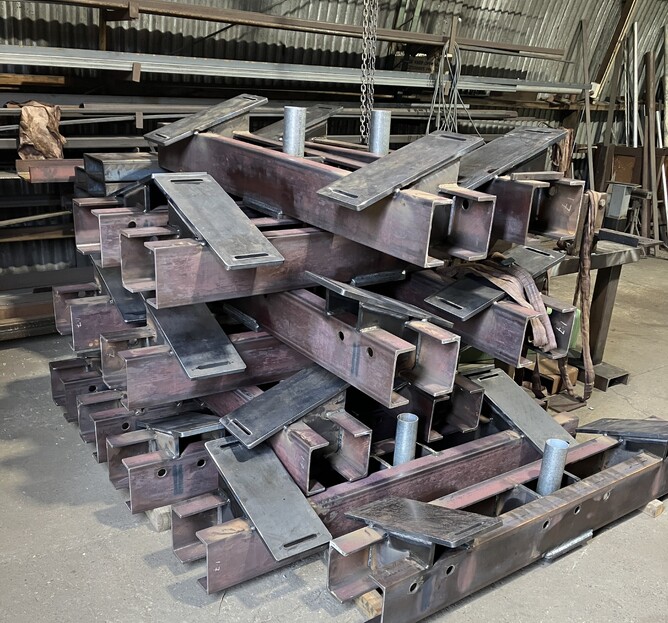
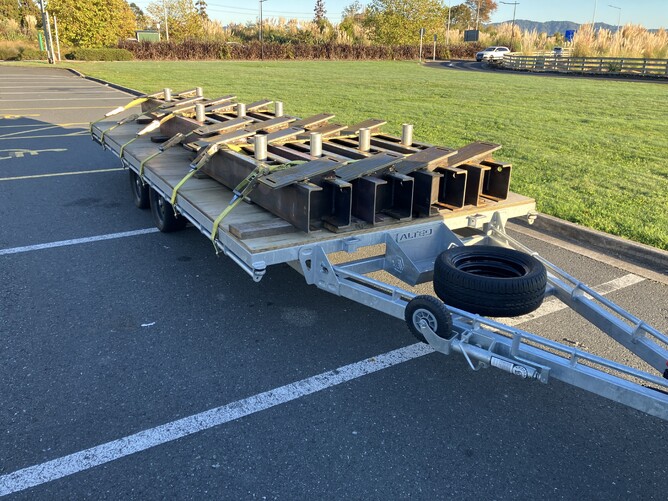
For a project with Nick Pemberton Construction in the Coromandel, we fabricated custom steel walers, working alongside the project engineers to get the detailing and protective coating right.
What does a waler beam actually do?
Earth behind a retaining wall creates pressure that the structure needs to resist. Water, sloping ground and additional loads can make the engineering requirements more demanding.
Walers help distribute those loads across the wall's supporting elements. Depending on the design, they can also connect to ground anchors that extend back into stable ground, providing additional resistance.
They're commonly used in engineered retaining systems where ground conditions, wall height or structural loads require additional support.
The principle is relatively straightforward. The engineering and fabrication details are where things get interesting.
Getting the details right
On the Nick Pemberton Construction project, the walers formed part of a coastal retaining wall system, where durability and connection detailing were particularly important.
Working with the project engineers, we specified the trumpet tube sealing and fastening details.
These connections matter because the performance of a retaining wall depends on more than the steel beams themselves. How components connect, how they're secured and how penetrations are protected all contribute to the long-term performance of the system.
It's the sort of detail that needs to be resolved before fabrication, not left to work out when everything arrives on site.
Our steel fabrication work often involves this level of collaboration, particularly on projects where the steel needs to integrate with other structural components.
Why HDG900 galvanising was the better option
Coastal environments aren't particularly kind to steel.
Salt exposure, moisture and difficult-to-access locations make corrosion protection an important consideration, especially for structural components expected to remain in place for decades.
For this project, we worked with the engineers to upgrade the galvanising specification to HDG900, providing a heavier zinc coating for increased corrosion protection.
The benefit wasn't just durability.
The upgraded galvanising eliminated the need for an additional painting system, removing a potentially costly and complicated step from the project.
Fewer processes, less ongoing maintenance to consider and a protective finish suited to the conditions.
That's a good outcome for everyone involved.
📍Client: Nick Pemberton Construction Ltd
📍Location: Coromandel
📍Key features: Custom steel walers, trumpet tube sealing and fastening details, HDG900 hot-dip galvanising